Automotive Cybersecurity Companies in 2026 - Top 5
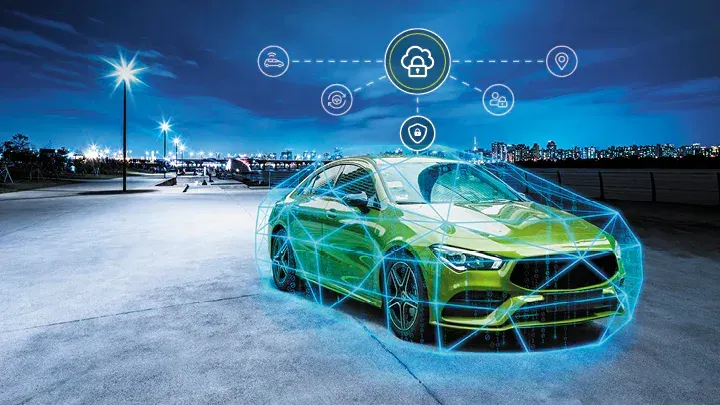
Automotive cybersecurity has become a major concern for vehicle manufacturers, suppliers and fleet operators. Modern vehicles contain dozens of electronic control units (ECUs), connected applications, wireless interfaces and software components that create potential entry points for cyberattacks.
Manufacturers must protect these systems throughout the vehicle lifecycle, from initial development and production to years of operation on the road.
Regulations such as UNECE R155 and the ISO/SAE 21434 automotive cybersecurity engineering standard have placed greater demands on manufacturers to identify, assess and manage these risks.
A growing number of specialist automotive cybersecurity companies now offer services covering penetration testing, embedded security, vulnerability monitoring, vehicle security operations centres (VSOCs) and regulatory compliance.
Here are five companies worth evaluating in 2026.
Top Automotive Cybersecurity Companies at a Glance
1. PCA Cyber Security
Best for: Automotive penetration testing, embedded device security and vulnerability monitoring.
PCA Cyber Security is a European cybersecurity company specialising in security testing, threat intelligence and continuous monitoring for embedded products.
Its automotive security work includes penetration testing of complete vehicles, ECUs, infotainment systems, telematics, EV chargers and the cloud infrastructure supporting connected vehicles.
PCA's research team has demonstrated vulnerabilities affecting vehicles from Volkswagen, Škoda and Nissan. Its researchers participated in the Pwn2Own Automotive competitions in 2024 and 2025.
Alongside penetration testing, the company develops PCA CERVUS, a platform focused on embedded product threat intelligence and vulnerability monitoring. It helps manufacturers identify vulnerable software components, analyse threats affecting their products and track remediation.
Key services include:
- Automotive and ECU penetration testing
- Hardware and firmware security assessments
- Threat Analysis and Risk Assessment (TARA)
- Software Bill of Materials (SBOM) validation and vulnerability analysis
- Product security monitoring and threat intelligence
- UNECE R155 and ISO/SAE 21434 security assessment support
PCA is particularly relevant to automotive OEMs and suppliers looking for independent security research, technical vulnerability assessments and ongoing monitoring of embedded products.
2. Upstream Security
Best for: Cloud-based vehicle security monitoring and threat detection across connected fleets.
Upstream Security provides automotive cybersecurity technology designed to monitor connected vehicles and mobility infrastructure at scale.
Its cloud-based detection and response platform analyses vehicle telemetry, APIs, over-the-air update systems and connected services to identify suspicious activity.
A distinguishing feature is its agentless architecture. Manufacturers can monitor supported vehicle data without installing dedicated security software on each vehicle.
Upstream provides managed Vehicle Security Operations Center services, combining automated detection with automotive security analysts.
Its main capabilities include vehicle threat detection and response, fleet monitoring, managed VSOC services and automotive threat intelligence.
Upstream is particularly suited to manufacturers and operators managing large connected fleets that need visibility into cyber threats affecting vehicles already on the road.
3. Vector Informatik
Best for: Embedded ECU cybersecurity software and integration into automotive development workflows.
Vector Informatik is a long-established automotive software and engineering technology company based in Germany.
Its cybersecurity products help vehicle manufacturers and Tier 1 suppliers integrate security directly into electronic control units and vehicle software.
Vector's MICROSAR HSM firmware provides cryptographic services, secure key handling and support for secure boot. The product has received ISO/SAE 21434 certification.
Vector provides security testing and validation capabilities through tools such as CANoe and vTESTstudio, alongside consulting for cybersecurity engineering, TARA and regulatory requirements.
4. VicOne
Best for: Broad automotive cybersecurity coverage, from in-vehicle protection to security operations.
VicOne is an automotive cybersecurity company backed by Trend Micro.
Its portfolio covers security inside connected vehicles, backend threat monitoring, vulnerability management and automotive security research.
VicOne offers xCarbon, an intrusion detection and prevention system designed for automotive ECUs and in-vehicle networks. Its xNexus platform supports vehicle security operations centres by correlating cybersecurity events and threat intelligence.
The company provides software supply chain security capabilities through its xZETA SBOM and vulnerability management offering.
VicOne is particularly relevant to automotive manufacturers seeking a combination of embedded protection, threat intelligence and fleet-wide security monitoring from one provider.
5. VxLabs
Best for: Automotive cybersecurity risk assessment, SBOM management and compliance workflows.
VxLabs is an automotive cybersecurity and embedded software company offering engineering services and dedicated security management technology.
Its ThreatZ platform is designed to bring several automotive cybersecurity processes into one environment, including Threat Analysis and Risk Assessment (TARA), SBOM management, vulnerability tracking and compliance reporting.
The platform supports workflows associated with ISO/SAE 21434, UNECE R155 and China's GB 44495 requirements.
VxLabs provides services covering penetration testing, cybersecurity engineering and support for regulatory approval processes.
The company is particularly relevant to OEMs and Tier 1 suppliers that need to manage cybersecurity documentation, risk assessments and software component vulnerabilities across multiple vehicle development programmes.
How to Choose an Automotive Cybersecurity Company
These five companies serve different requirements. Choosing a provider starts with identifying which part of the automotive cybersecurity lifecycle needs attention.
For penetration testing and security research: Look for specialists with demonstrated automotive vulnerability research, access to hardware testing facilities and experience testing full vehicles and embedded systems.
For embedded vehicle protection: Focus on products that integrate with ECU hardware, AUTOSAR architectures and existing development environments.
For connected fleet monitoring: Evaluate whether a provider can analyse vehicle telemetry, detect attacks across cloud and vehicle systems, and support incident investigations through a VSOC.
For cybersecurity compliance: Check support for ISO/SAE 21434 engineering workflows, UNECE R155 cybersecurity management requirements, TARA documentation and evidence management.
For ongoing vulnerability management: Assess how the provider maintains software component inventories, identifies newly disclosed vulnerabilities and connects findings to specific vehicle systems.
Most vehicle manufacturers will need more than one type of cybersecurity provider. An embedded security product does not replace independent penetration testing, and a cloud monitoring platform cannot identify every vulnerability in vehicle firmware.
The right combination will reflect the manufacturer's vehicle architecture, internal security capabilities and regulatory obligations.
For more information, see Cyber Vendor Guide's automotive cybersecurity company comparison, which covers each company's capabilities, target customers and services.